Income Tax Saving Tips for Salaried Employees in India
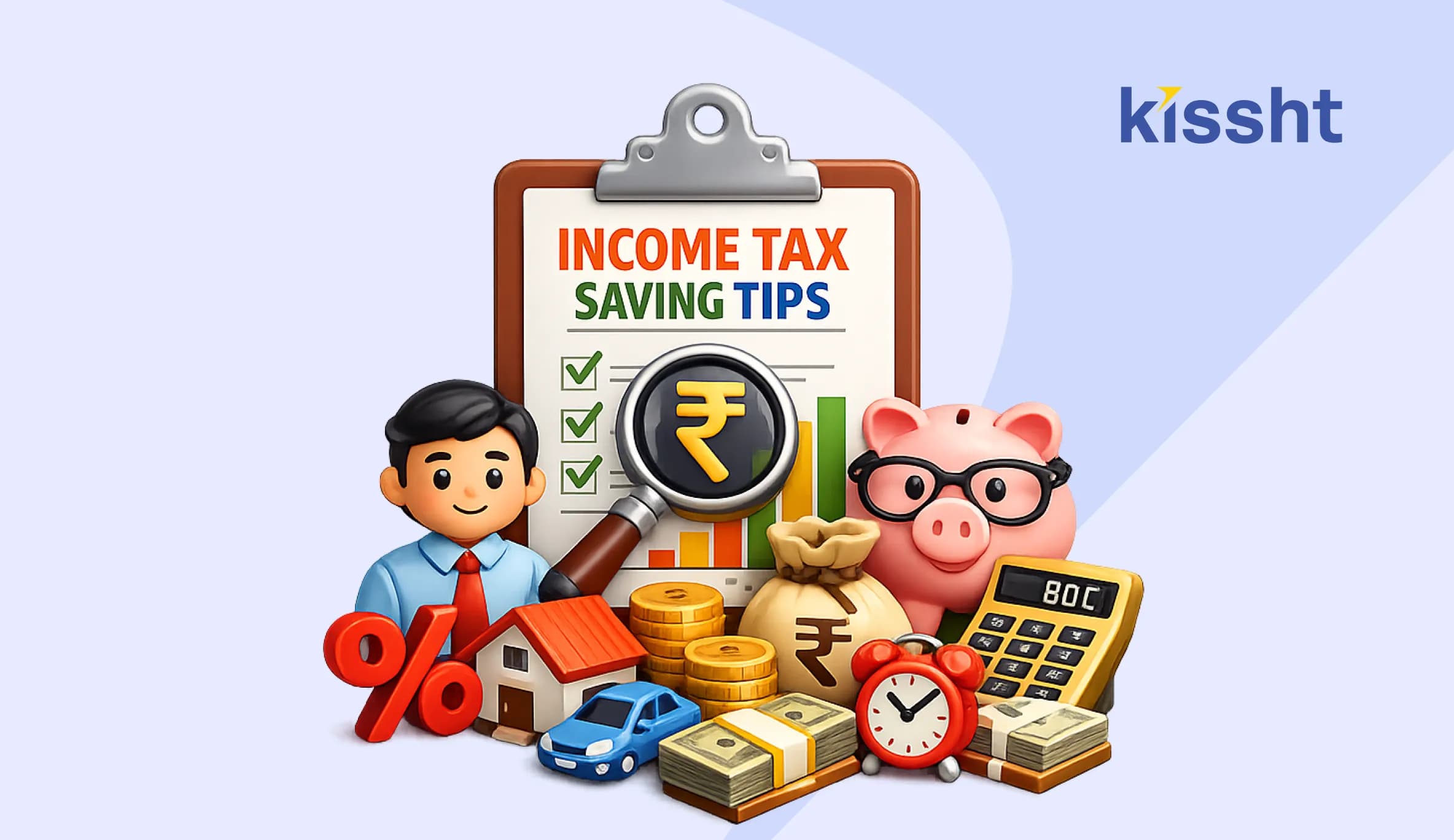
Smart tax planning empowers salaried professionals to take control of their finances and maximise their take-home income. By understanding available deductions and making informed investment choices, you can legally reduce your tax liability while strengthening your long-term financial position. A well-planned approach ensures that your salary works harder for you throughout the year.
This detailed guide on income tax-saving tips for salaried employees explains practical strategies and actionable steps. If you are searching for reliable tax-saving tips for salaried employees in India, understanding deductions, exemptions, and investment options is the first step toward smarter financial planning.
Understand Your Tax Regime Before Planning
Before exploring investments, decide whether the old tax regime or the new tax regime suits you better. The old regime allows multiple deductions, while the new regime offers lower tax rates but limited exemptions.
Choosing the correct regime plays a key role in income tax planning for salaried employees.
Claim All Eligible Income Tax Deductions
One of the easiest ways to reduce tax burden is by claiming all applicable exemptions and deductions.
Common Income Tax Deductions for Salaried Employees
- Standard deduction
- House Rent Allowance, where applicable
- Leave Travel Allowance
- Deduction under Section 80C
- Section 80D for health insurance
- Section 80CCD for National Pension System
Understanding these income tax deductions for salaried employees helps ensure you do not miss legitimate benefits.
Invest Under Section 80C Wisely
Section 80C allows deductions up to ₹1.5 lakh per financial year.
Best Tax-Saving Investments for Salaried Employees
- Public Provident Fund
- Employee Provident Fund
- Equity Linked Savings Scheme
- Life insurance premiums
- Five-year fixed deposits
Selecting the right instruments is part of identifying the best tax-saving investments for salaried employees based on risk appetite and financial goals.
Optimise House Rent Allowance
If you live in rented accommodation and get HRA as part of your salary, then you can avail an exemption under the prescribed rules. Ensure:
- Rent receipts are maintained
- PAN of the landlord is available if the rent exceeds the prescribed limits
This is a practical approach to understanding how to save income tax on salary.
Use Health Insurance for Additional Deduction
Premium paid for health insurance qualifies for a deduction under Section 80D. This reduces your taxable income and supports long-term financial security.
Including health insurance in your portfolio is one of the commonly recommended tax-saving options for salaried employees.
Contribute to the National Pension System
Under Section 80CCD 1B, investing in the National Pension System offers an additional deduction of up to ₹50,000. This is over and above the deduction limit under Section 80C.
Strategic retirement planning plays an important role in reducing taxable income in India.
Consider Home Loan Benefits
If you have taken a home loan:
- Principal repayment qualifies under Section 80C
- Interest payment qualifies under Section 24
These deductions significantly reduce taxable income while helping build long-term assets.
Plan Salary Structure Smartly
A well-structured salary can reduce tax liability.
Employers may offer components such as:
- Meal vouchers
- Telephone reimbursement
- Fuel allowance
- Education allowance
Optimising salary structure is a crucial element of income tax planning for salaried employees.
Track Investments and Documentation
Maintaining proper documentation is essential. Keep:
- Investment proofs
- Insurance premium receipts
- Loan repayment certificates
- Rent receipts
A disciplined approach forms the foundation of a comprehensive tax-saving guide for salaried employees.
Avoid Last-Minute Tax Planning
Many salaried individuals rush to invest in March. Instead:
- Start planning at the beginning of the financial year
- Spread investments across months
- Review portfolio quarterly
Early planning gives flexibility and reduces pressure.
Manage Loans Carefully
While loans are not primarily tax-saving tools, certain loans offer deductions. For example:
- Home loans provide tax benefits
- Education loans offer interest deductions under Section 80E
If you are considering borrowing through an online loan app or applying for an instant loan online, evaluate whether the loan qualifies for tax benefits. Not all personal loans provide deductions, so understanding the purpose and applicable sections is important.
Responsible borrowing should complement tax planning rather than replace it.
Quick Overview of Key Deductions
| Deduction Section | Maximum Benefit | Purpose |
|---|---|---|
| 80C | ₹1.5 lakh | Investments and insurance |
| 80D | ₹25,000 to ₹50,000 | Health insurance |
| 80CCD 1B | ₹50,000 | NPS contribution |
| Section 24 | As applicable | Home loan interest |
This summary helps simplify decision-making when evaluating tax-saving options for salaried employees.
Common Mistakes to Avoid
-
Ignoring Investment Deadlines
Many tax-saving investments must be completed before the end of the financial year to qualify for deductions. Missing deadlines can result in lost tax benefits and higher taxable income.
-
Not Comparing Tax Regimes
Choosing between the old and new tax regimes without proper calculation can lead to unnecessary tax outflow. Always compare total tax liability under both regimes before making a decision.
-
Overlooking Employer-Provided Exemptions
Several salary components, such as HRA, LTA, and reimbursements, may offer exemptions if structured correctly. Ignoring these benefits means you could end up paying more tax than required.
-
Investing Without Aligning with Financial Goals
Tax savings should not be the only objective while selecting investments. Choosing products that don't match your risk appetite or long-term goals can affect overall financial stability.
-
Failing to Review Form 16 Carefully
Form 16 contains details of your income and tax deducted at source. Errors or mismatches, if not identified early, can lead to incorrect tax filing and possible notices later.
Avoiding these mistakes strengthens your overall tax efficiency.
Final Thoughts
Effective tax planning is about awareness, discipline, and timely action. By understanding deductions, choosing the right investments, and structuring your salary wisely, you can significantly reduce your taxable income while building long-term wealth. A proactive approach ensures compliance and financial growth year after year.
FAQs
Q1. How can salaried employees save on income tax legally?
Salaried employees can save tax by claiming deductions under Sections 80C, 80D, 80CCD, and Section 24, along with optimising HRA and other allowances.
Q2. What are the best tax-saving investments for salaried employees?
Public Provident Fund, Employee Provident Fund, ELSS, NPS, and life insurance premiums are among the commonly chosen options.
Q3. How to reduce taxable income in India for salaried individuals?
You can reduce taxable income by investing in eligible instruments, claiming deductions, restructuring salary components, and contributing to retirement schemes.
Q4. Do personal loans help in saving income tax?
Generally, personal loans do not provide tax benefits unless used for specific purposes like education or home purchase under applicable sections.



Instant Loans at Your Fingertips


Personal Loan
Fast, hassle-free loan for your personal needs.

Business Loan
Fuel your business growth with quick approvals.

Loan Against Property
Unlock your property’s value with ease.

Credit Pulse
Boost your credit score with smart insights.

Track your credit score
Simply enter your mobile number to get a quick overview of your credit score.
Check Now

Related articles

Feb 23, 2026
Disneyland Locations in the World with Ticket Prices
Feb 22 ,2026
How to File GST Return Online Step-by-Step in India

Feb 23, 2026
What is Kisan Vikas Patra? KVP Scheme Features, Benefits, Interest Rate & Eligibility
Feb 18, 2026
What is the Digital Seva Portal? Registration, Login & Services Explained

Feb 17, 2026
Top 10 TV Brands in India 2026 - Price & Key Features

Feb 15, 2026
CIF Full Form in Banking: Meaning, Uses & Importance Explained

Feb 23, 2026
Black Friday 2026 Date in India: What Is Black Friday & Why Does Everyone Shop on This Day?
Feb 23, 2026
How to Apply Electric Vehicle Subsidy in India 2026: Eligibility, Amount & Process

Feb 23, 2026
Best Summer Vacation Places in India for a Refreshing Escape

Feb 23, 2026
How to Earn Money Online in 2026: Turning a Side Hustle into Main Income

Feb 23, 2026
International Women’s Day Date: Why Financial Independence for Women Matters in 2026
Feb 19, 2026